
George Lee Custer Donohue
Jul 8, 1944 - Apr 23, 2026
George Lee Custer Donohue
Jul 8, 1944 - Apr 23, 2026
George Lee Custer Donohue - Obituary
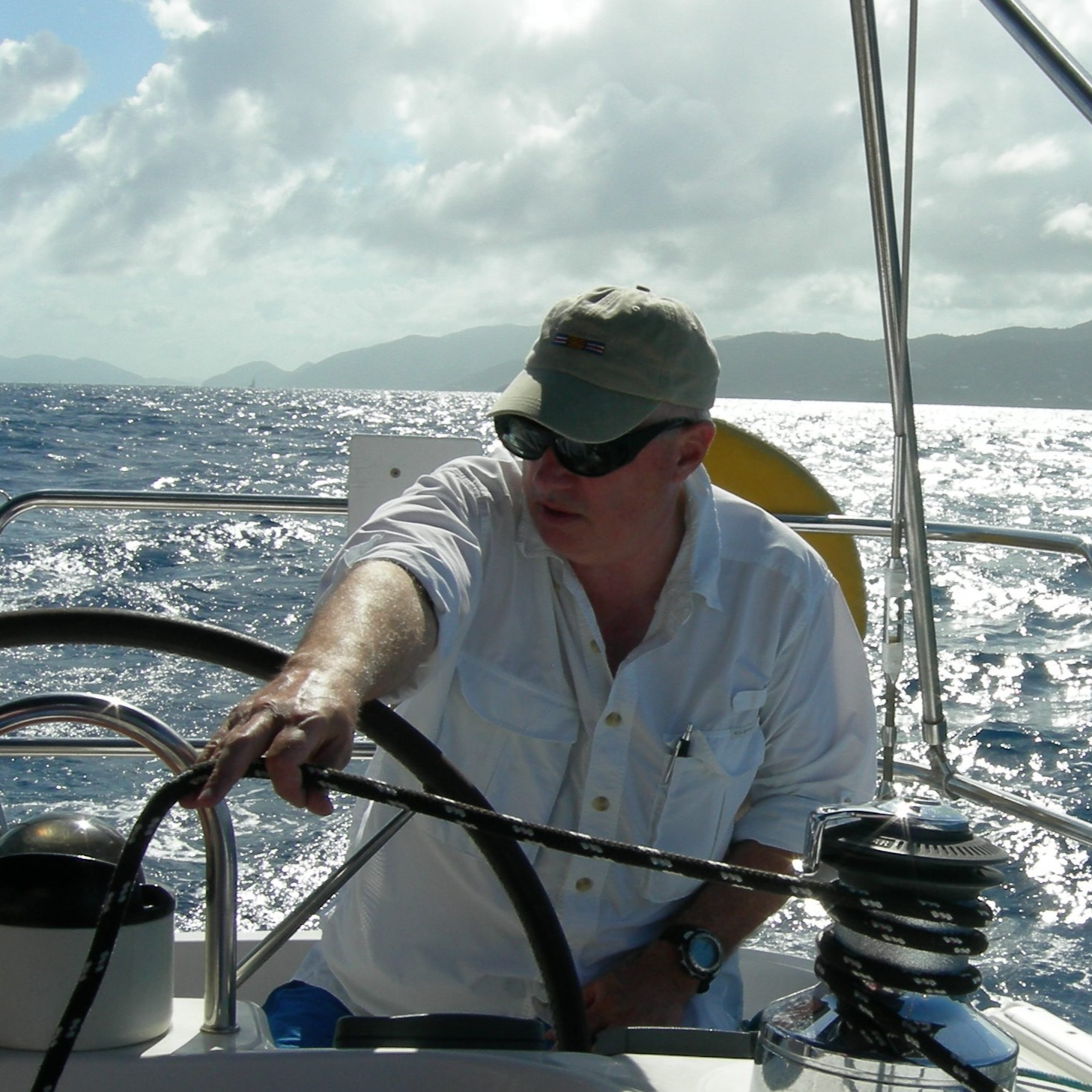
r. George L. Donohue, an engineer, public servant, teacher, and man of deep moral conviction, passed away on April 23, 2026. He was 81. Born on July 8, 1944, in Wichita, Kansas, George entered the world under extraordinary circumstances. His biological father, Navy aviator Ens. George Edward Custer, was killed in a training accident during World War II eight months before his birth. He was later adopted by James Donohue, whose name he carried throughout his life. The loss of his father, and the example of service and sacrifice he represented, profoundly shaped George’s lifelong sense of duty to his country and to others. Raised in Houston, Texas, George was educated at St. Thomas High School, where the Basilian Fathers instilled in him a commitment to faith, intellectual rigor, and service. Influenced by Catholic social teaching, he developed an enduring belief that education and expertise carried moral obligations - a principle that would guide both his career and his life. He pursued undergraduate studies at Georgia Tech and the University of Houston before earning a Master of Science and Ph.D. in Mechanical and Aerospace Engineering from Oklahoma State University in 1972. George’s career placed him at the center of some of the most consequential national defense and aviation challenges of his time. In the 1970s, he conducted research on advanced undersea systems for the U.S. Navy and received the Secretary of Defense Meritorious Civilian Service Medal for his leadership of a nationally significant DARPA program. He later joined the RAND Corporation, where he rose to become Vice President of Project AIR FORCE, and also served as Director for Strategic and Aerospace Systems at DARPA. During the Cold War, George engaged deeply in debates over strategic missile defense and nuclear policy. While firmly committed to national defense, he approached these issues through a moral and ethical lens shaped by his faith. In a 1986 lecture to University of Minnesota students, he challenged prevailing assumptions about missile defense, asking not only whether such systems could work, but whether their deployment would ultimately make the world more or less secure. In 1994, George was appointed Associate Administrator of the Federal Aviation Administration, where he led efforts to modernize the nation’s air traffic control system. He was a driving force behind innovative programs such as Flight 2000 and helped advance the adoption of ADS-B surveillance technology, now foundational to modern global aviation. In 1997, National Journal named him to the “Decision Makers - Washington 100” list, recognizing his leadership in transforming complex federal systems. He was nominated to serve as Deputy Administrator of the FAA and was also named a Fellow of the American Institute of Aeronautics and Astronautics. In 1998, George began a new chapter as a professor at George Mason University, where he taught systems engineering and operations research. He continued teaching as Professor Emeritus until 2022, influencing generations of students with both his technical expertise and his principled approach to public service. George brought the same sense of purpose to his family life. Despite the demands of a national career, he made deliberate efforts to be present, often taking redeye flights so he could spend weekends at home with his wife and daughters. He believed in preparing his children for the world as it is, instilling in them independence, resilience, and a respect for education. He taught them to carry what they could manage, to travel light, and to meet new experiences with confidence and discipline. He shared with his family a love of adventure, skill, and the open world. He began sailing in his early 30s in San Diego Bay and later chartered boats from King Harbor, including family trips to Catalina Island. In 2006, he became skipper of the S/V Ana G III, named for his wife, Ana, and to honor her father, John Grillis of Patmos, Greece. He climbed Mount Whitney with a friend to mark his 50th birthday at the summit. He earned his private pilot’s license in 1994 and enjoyed flying small aircraft. He embraced motion and mastery in many forms. He rode motorcycles for years and approached the risks with characteristic realism and discipline. He drove only manual transmission cars, believing engagement mattered, and delighted in his Mazda Miata convertibles. In later years, he took up shotgun clay shooting and became, according to friends, a highly competitive shot. He also found joy in travel and exploration. He and his wife shared a love of sailing voyages, including cruises aboard Star Clippers vessels, crossing both the Atlantic and the equator together. He held a black belt in Tae Kwon Do and maintained a lifelong interest in Asian cultures, including Japanese sword making. Even in retirement, George remained intellectually engaged and civically active. He drafted proposals to improve traffic flow on the Chesapeake Bay Bridge, explored early legislative approaches to regulating artificial intelligence, and volunteered with the Arundel Rivers Federation. He was also a valued member of a longstanding lunch group of retired Washingtonians - known affectionately as the “ROMEO” group (Retired Old Men Eating Out) - where his depth of experience and perspective were deeply appreciated by his peers. After moving to Churchton, Maryland, in 2009, George remained active in his community, serving as Commodore of the Chesapeake Yacht Club, President and Treasurer of the South County Democratic Club, and President of the Cape Anne Citizens Association. As a guest columnist for The Capital Gazette, he continued to contribute thoughtfully to public discourse. His commitment to education and opportunity extended quietly but meaningfully to philanthropy. With his brothers he established an endowed scholarship at St. Thomas High School to support young men of limited means pursuing studies in science, technology, and medicine - fields that had shaped his and his brothers' lives. Dr. Donohue is survived by his wife of 57 years, Andreana Grillis Donohue; his daughters, Carmen Donohue (Adam Centamore), Kathleen Donohue (David Backman), Georgiana O'Connor (Jason), and Caroline Cassidy (Brett); six grandchildren, James, Emily, Max, Logan, Piper, and Rory; two step-grandchildren, Tanner and Brenden, and his brothers, Pat Donohue (Jodi) and John Donohue (Joni). He is also survived by his sisters-in-law, Carmen Peña, Jayne Silva (Solomon), Helen Grace Alvarado (Jesse), Eva Rodriguez, and Genie Packard (Lawrence), as well as many nieces, nephews, and their families. He is remembered in communities such as San Diego, San Pedro and Santa Monica, California, in the National Capital Region, and especially in Houston, Texas. Dr. Donohue was predeceased by his father, Ens. George E. Custer, USNR; his mother, Dorothy Cunningham Custer Donohue; his stepfather, James Donohue; and his sister and brothers-in-law, Dr. Alfred and Nia Garza, Gaston Peña, John Grace, and Benito Rodriguez. A Mass of Christian Burial will be held on Thursday, May 28, 2026, at 10:30 a.m. at Our Lady of Sorrows Catholic Church, 101 Owensville Road, West River, MD. Interment will follow. A Memorial Mass will take place in Houston, Texas, at a later time. In lieu of customary remembrances, the family requests that memorial contributions be directed to the Donohue Engineering & Medical Science Scholarship Fund at St. Thomas High School, 4500 Memorial Drive, Houston, Texas 77007, or by visiting https://www.sths.org/support/fundraising/memorialgifts/.



©2025 Kalas Funeral Home & Crematory. All rights reserved.